
A stronger clean for more stubborn drainage lines
Works beyond one tight spot
Jetting can travel farther along the line to treat more of the affected pipe.
Adjusted to the drain
Pipe dimensions, condition and deposits all help decide how the jetting is used.
Checks after the wash through
Post-jetting assessment confirms the residue has moved and the line is working.
Professional jetting for stubborn deposits inside the line
High-pressure water jetting is a professional method for clearing stubborn blockages and washing persistent residue from the inside of drainage lines. It can be used across domestic, commercial and industrial systems, with the application adjusted to the pipe condition, the line dimensions and the kind of deposits being removed. That matters because heavy residue needs more than guesswork if you want a thorough result. When you book Flowfix Drainage Services Ltd, the jetting work is planned around the actual drain in front of us, so the pressure and access used make sense for the condition of the system and the material we need to shift.
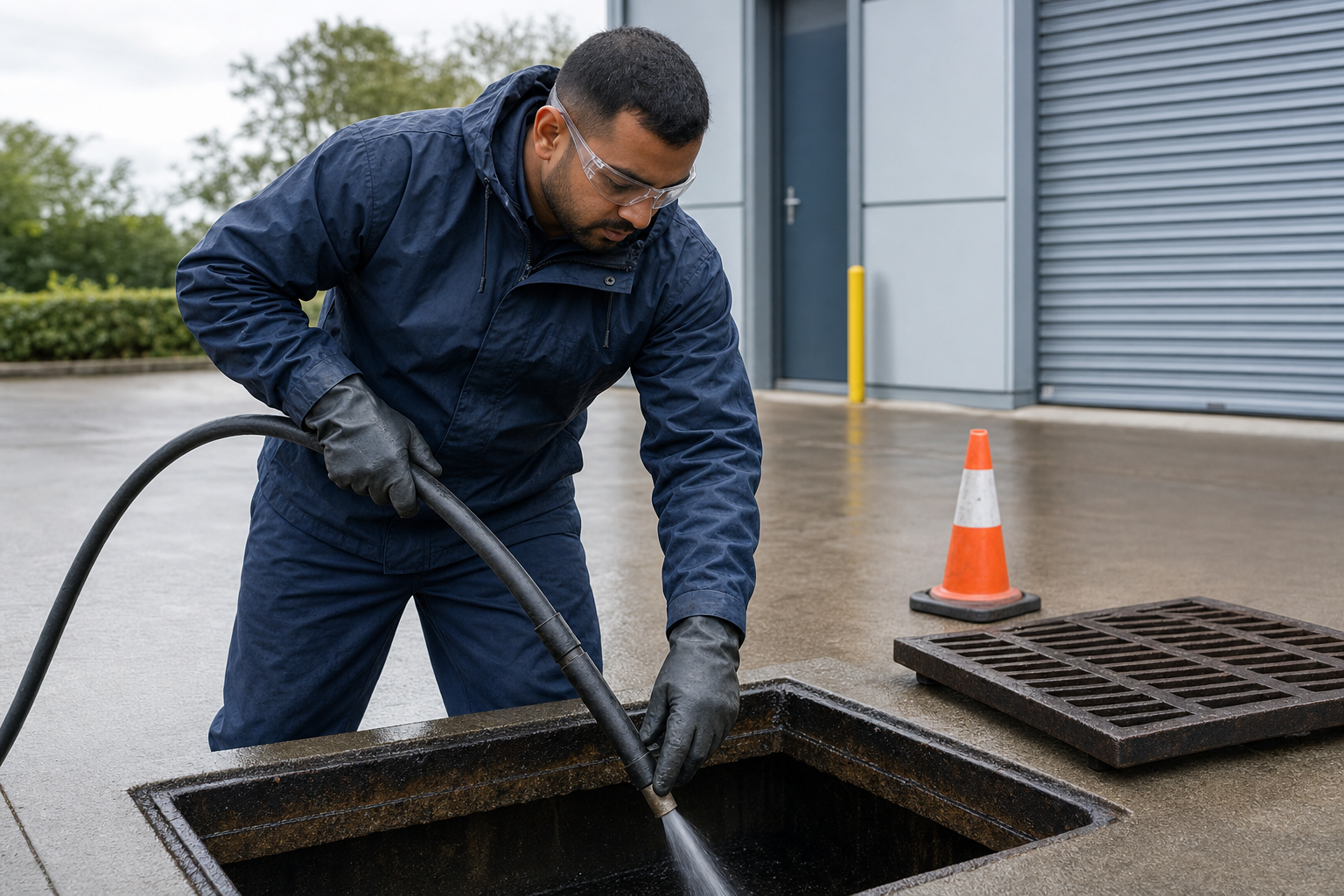
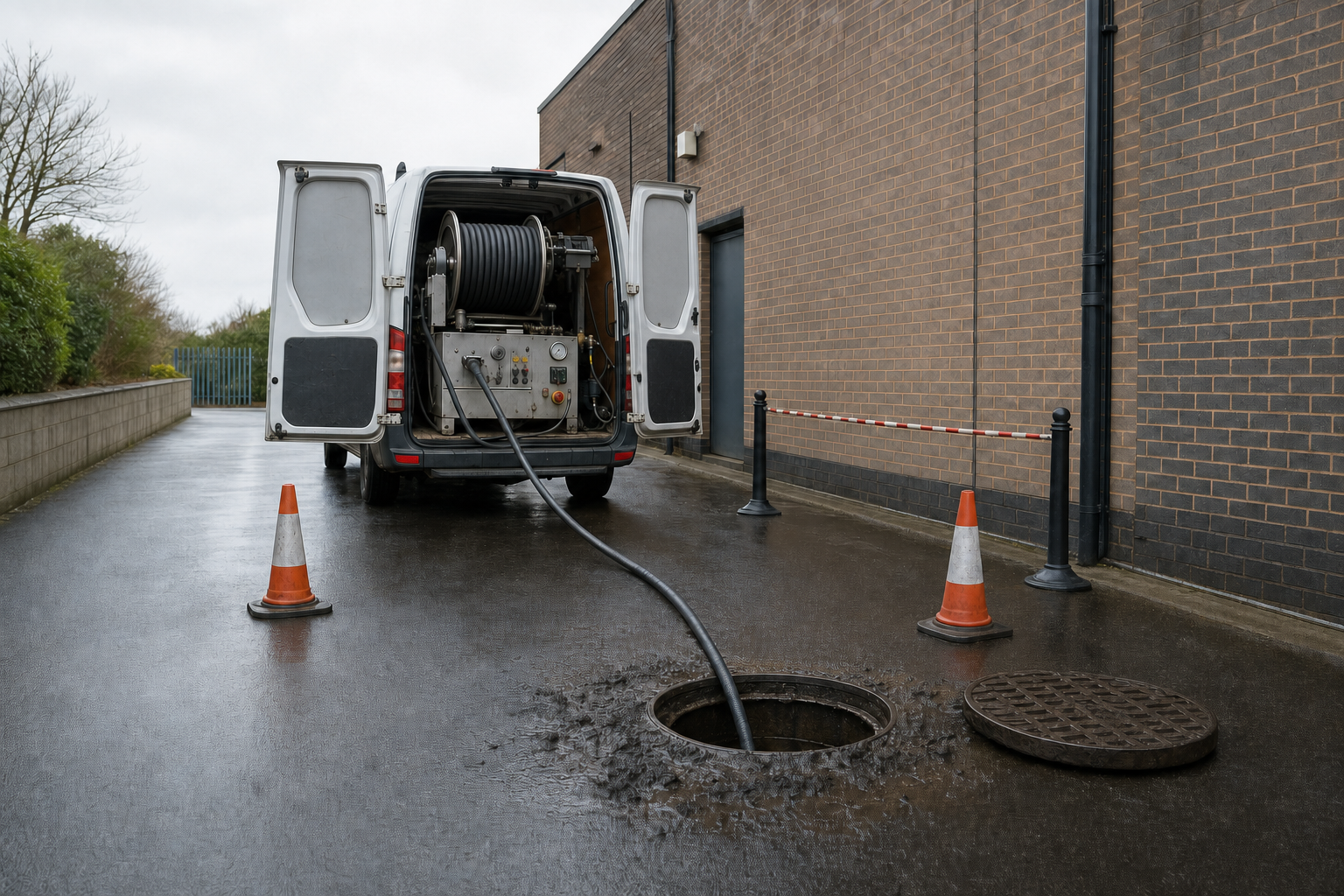
Useful for longer runs and repeat build-up
Water jetting can reach along pipe runs from a suitable access point and carry broken-up material toward a collection or discharge point. It becomes especially useful where there is repeat build-up, a long drainage run or residue left behind after the main blockage has already been released. With Flowfix Drainage Services Ltd, the job ends with a flow assessment so we can confirm the loosened material has moved through and the treated line is functioning as it should again.
Frequently asked questions
When is water jetting worth using?
Water jetting is often worth using when blockages are stubborn, deposits keep returning or the drainage run is long enough that a local release would leave too much residue behind. It is a practical option when the aim is not just to reopen the drain, but to wash more of the line clean as well.
Can jetting help after a blockage has already been released?
Yes. Sometimes the main obstruction moves, but residue is still clinging to the pipe interior and likely to catch more waste. Jetting can be the follow-on step that washes out that remaining build-up, especially where the line has a history of recurring problems or carries heavier deposits.
How do you check the drain after jetting?
We assess the flow afterwards to make sure the loosened material has moved through the system properly and that the line is functioning effectively again. If signs of restriction remain, we explain what we are seeing and whether another step would be sensible based on the condition of the drain.