
When residue needs more than a simple release
Breaks up stubborn deposits
Jetting tackles grease, sludge and silt that stay attached after lighter clearance work.
Reaches deeper into the run
Water can travel along the line from a suitable access point to treat more of the pipe.
Checks after the wash through
We test the flow afterwards to make sure loosened material has moved through well.
A thorough way to break up heavy deposits
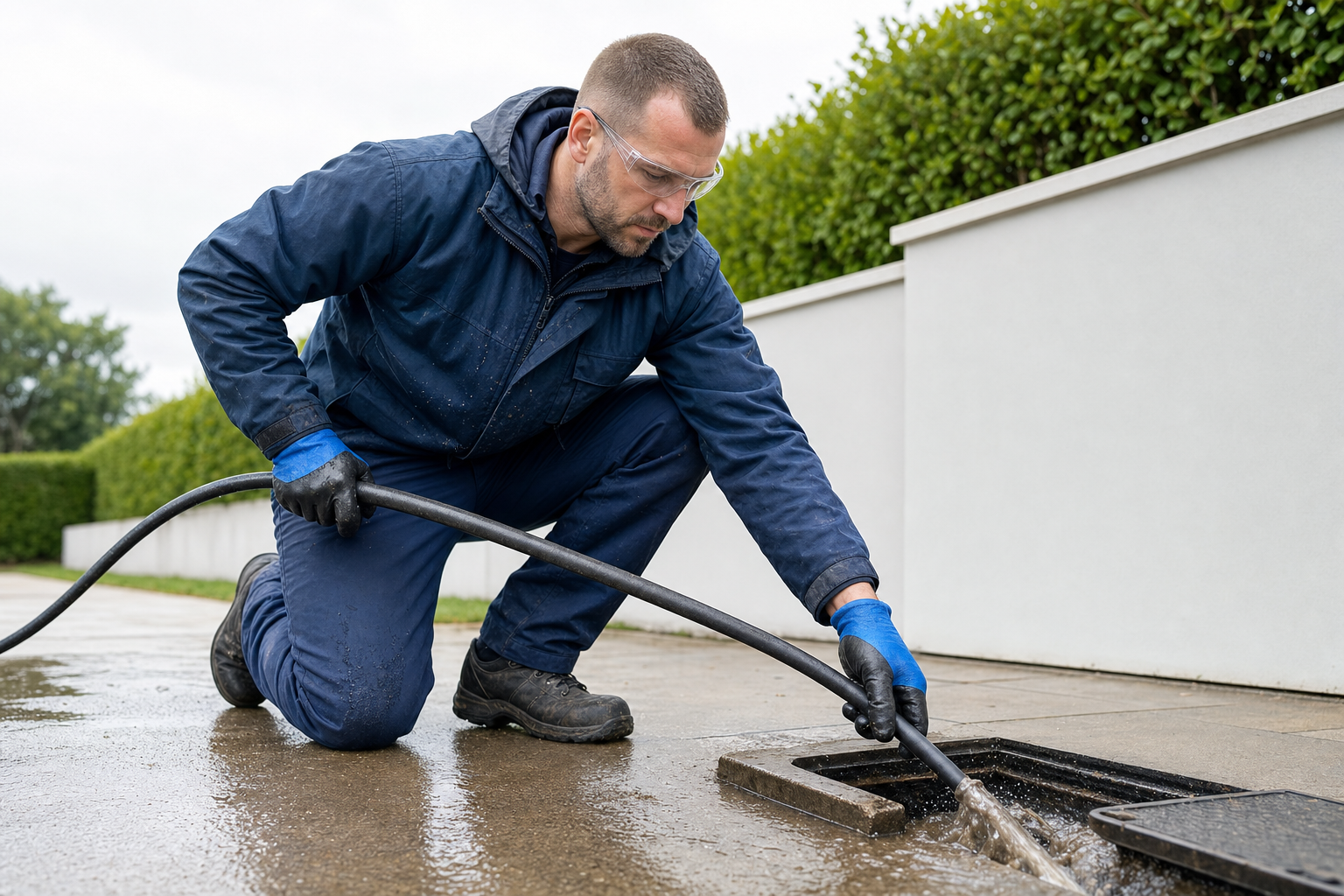
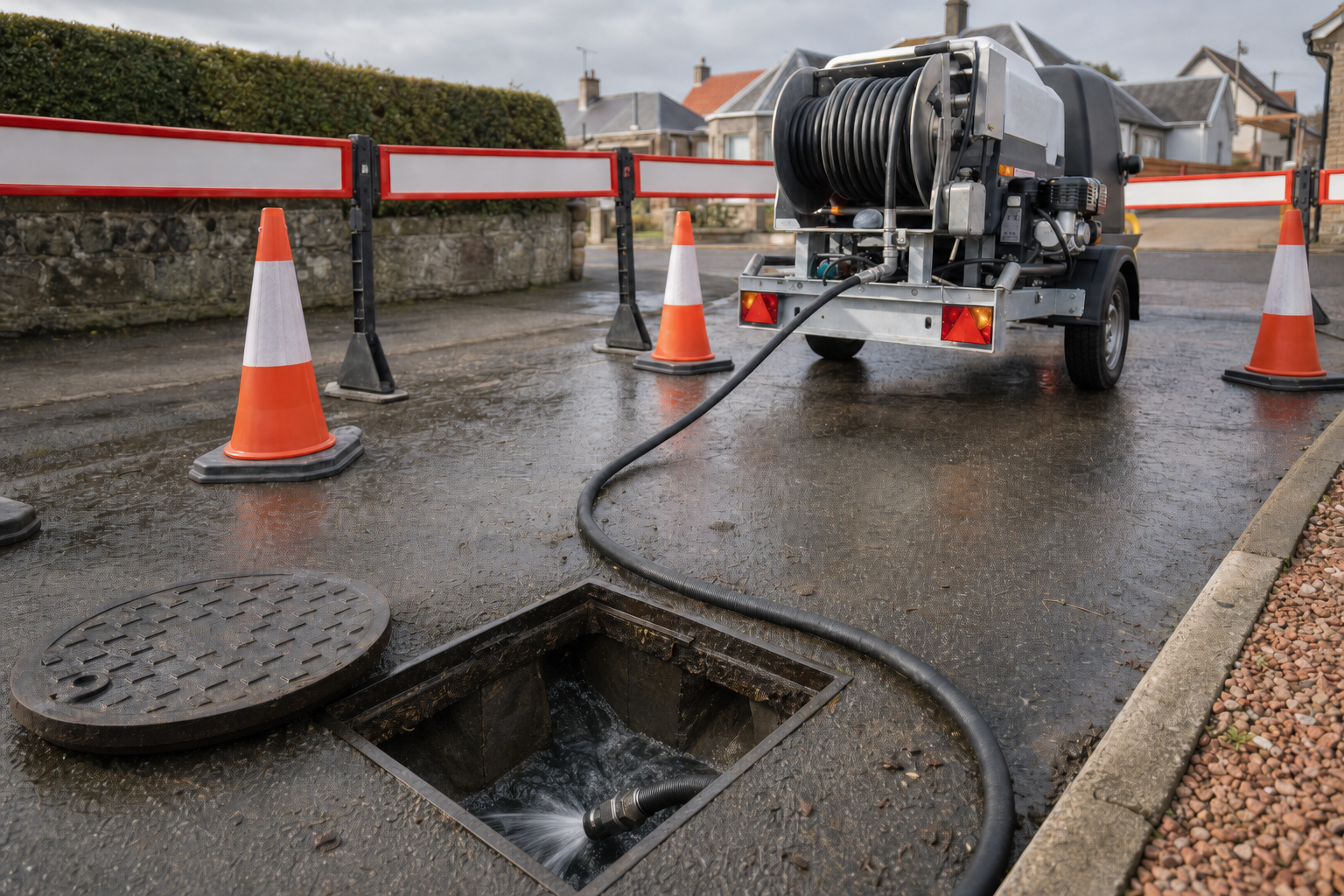
When a drain has more than a simple local blockage, high-pressure jetting can be the right way to clear it more thoroughly. The process sends controlled water through specialist nozzles to break up and move stubborn material along the pipework. It is commonly used against grease deposits, silt, sludge and compacted debris that cling to the pipe interior and keep causing trouble. A visit from Flowfix Drainage Services Ltd is planned around the type of drain, the condition of the line and the best access point, so the jetting work is set up to remove the build-up rather than just punch a small path through it.
Jetting planned around the drain itself
Nozzle choice, water pressure, drain diameter and access all affect how jetting is carried out. We prepare the work area, contain loosened material where needed and direct the debris so it can move toward a suitable collection or discharge point. Once the jetting is complete, we carry out a final flow check to confirm the line is working properly. With Flowfix Drainage Services Ltd, you get a method chosen for the pipe and the residue inside it, not a rushed approach that leaves heavy deposits behind.
Frequently asked questions
When is drain jetting normally used?
Jetting is commonly used when the blockage is stubborn, the line has a lot of residue attached to it or repeat problems suggest a simple release will not be enough. It is also useful after part of an obstruction has already moved but the pipe still needs a more complete wash through.
Is jetting suitable for every blocked drain?
Not always. The right method depends on the pipe condition, its size, the available access and the type of material inside it. We look at those factors before starting, because some drains need direct clearance first while others benefit most from a full high-pressure clean.
What happens after the jetting is finished?
After jetting, we check that water is running away properly and that the loosened material has moved through the system as expected. If the line still shows signs of trouble, we explain what we have found and whether another step, such as inspection or repair, is likely to be needed.