
Practical steps for a blocked household drain
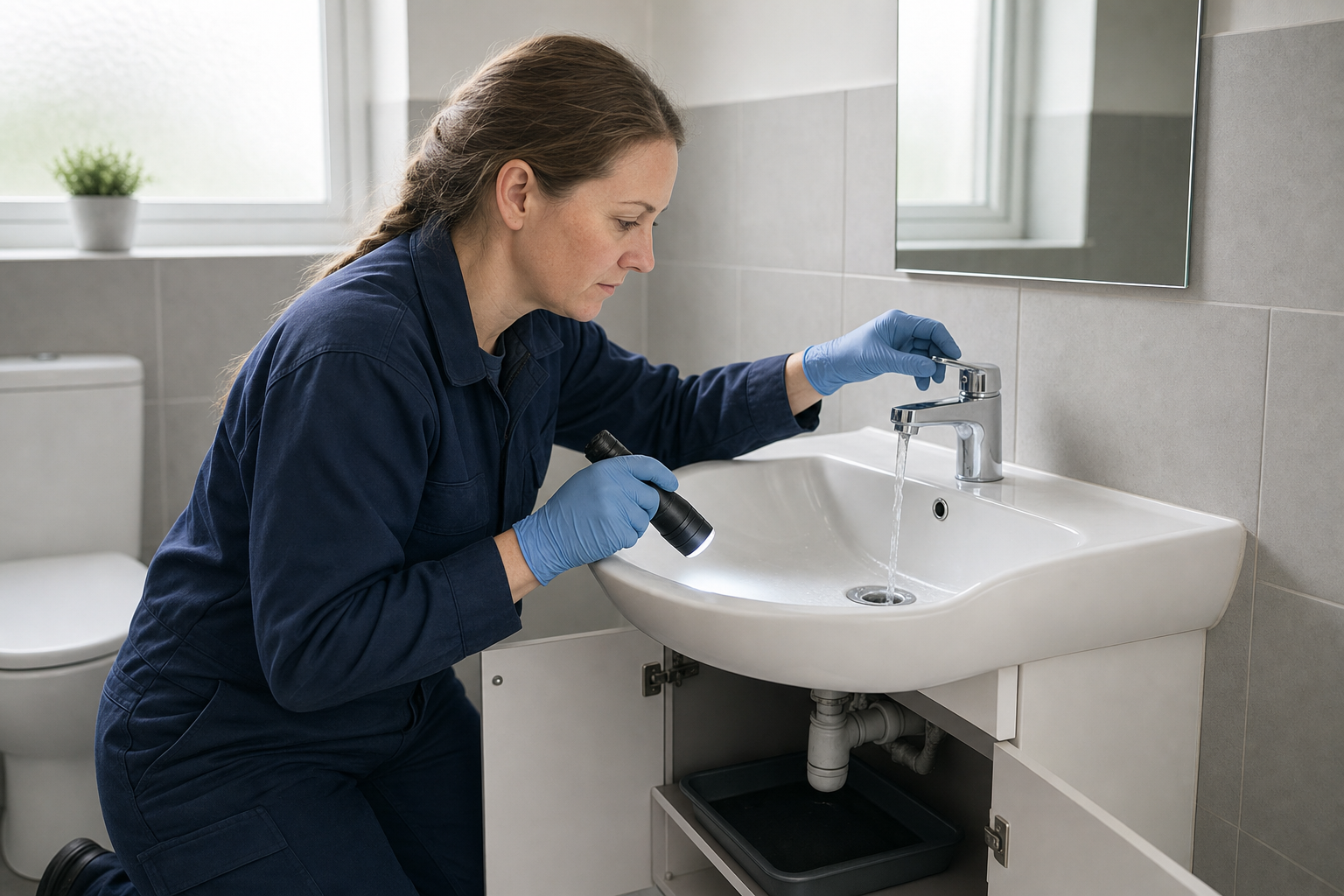
Use the fixture pattern
Which fittings are affected helps us narrow the problem before we arrive.
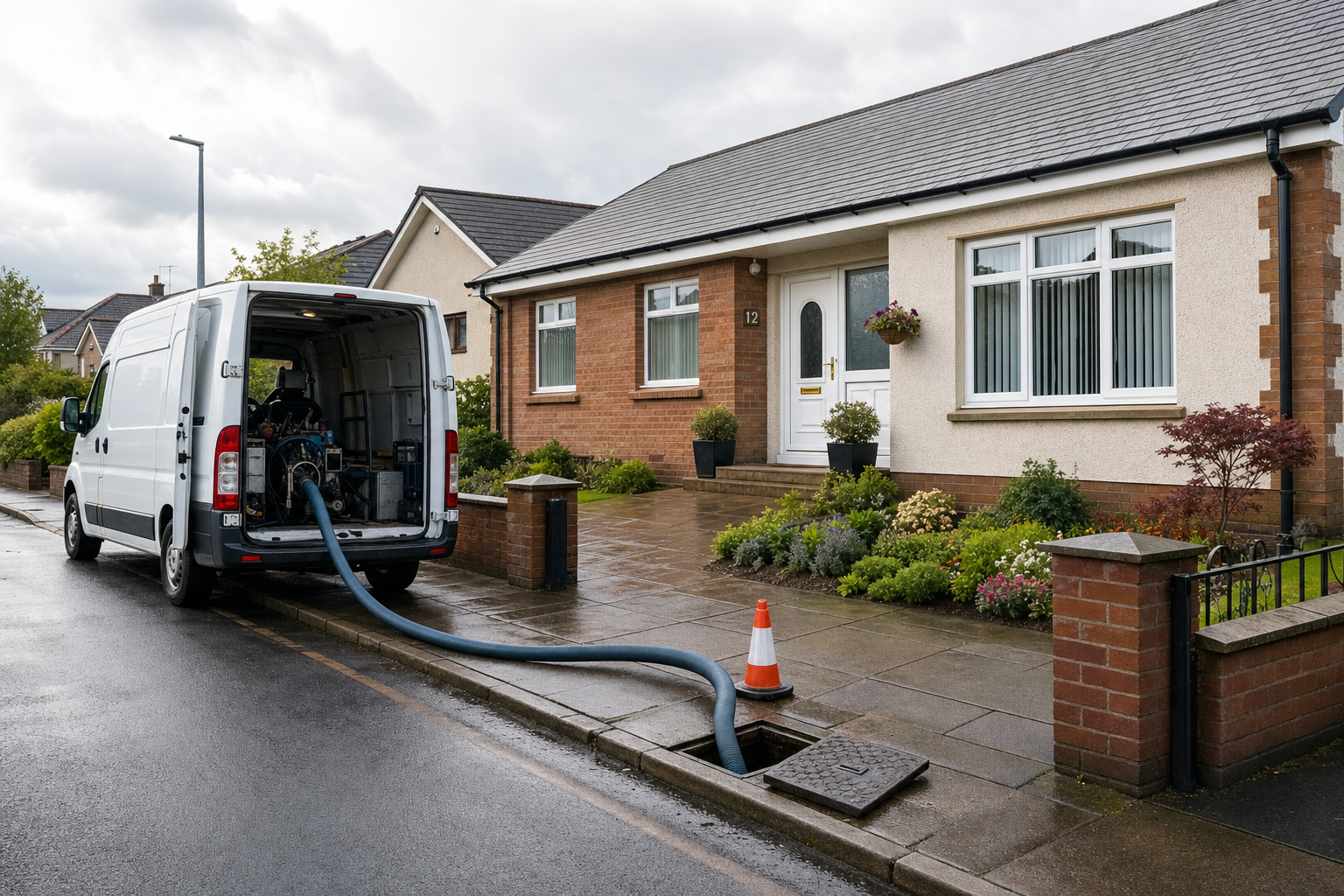
Test after the release
We check drainage from the relevant fixtures once the blockage has been cleared.
Advice on repeat problems
Ongoing symptoms can point to deposits or another persistent drainage cause.
When household drains stop behaving normally
Domestic drain blockages often start with signs that are easy to spot but hard to place. A sink may empty slowly, toilet water may rise, pipes may gurgle, bad smells may build up or wastewater may return through a low-level outlet. One useful first step is to check which household fixtures are affected, because that can help narrow the fault to an appliance connection, soil pipe, gully or main drain. When you call Flowfix Drainage Services Ltd, those details give us a better picture of the line before we travel and help us prepare the most suitable approach for the blockage at your home.
Clearance followed by a proper flow test
We clear the blockage through the most appropriate access point and then test the drain from the relevant household fixtures to confirm water is running away properly. Before attendance, it helps to stop using washing machines, dishwashers and other water sources connected to the affected line so the problem does not worsen. With Flowfix Drainage Services Ltd, you also get honest advice if repeated household blockages suggest built-up deposits or another persistent cause rather than a one-off obstruction.
Frequently asked questions
Should I stop using appliances before you arrive?
Yes, if the appliance drains into the affected line and it is safe to stop. Washing machines, dishwashers and similar appliances can add more water to a blocked system and increase the chance of backing up. Pausing their use helps limit that risk and gives us a clearer picture of the underlying issue.
What does it mean if only one fixture is affected?
If only one sink, toilet or outlet is affected, the blockage may be close to that fixture or within the branch serving it. If several fixtures are involved, the problem may be farther down the line. Telling us which outlets are showing symptoms is one of the most useful things you can do before we attend.
When is a repeat blockage a sign of a bigger issue?
If the same drain keeps slowing down, backing up or giving off smells after previous clearance, there may be built-up deposits or another condition inside the run that has not been fully addressed. In that case, a more thorough clean, jetting or further investigation may be the sensible next step.