
Help that fits high-use commercial drains
Focus on essential areas
We plan around toilets, kitchens, yards and other parts of the premises that matter most.
Built for heavier use
Commercial drains often face grease, food residue, silt and frequent demand.
Useful follow-up advice
The condition of the line can guide cleaning or maintenance after the blockage clears.
Blocked commercial drains can affect the whole site
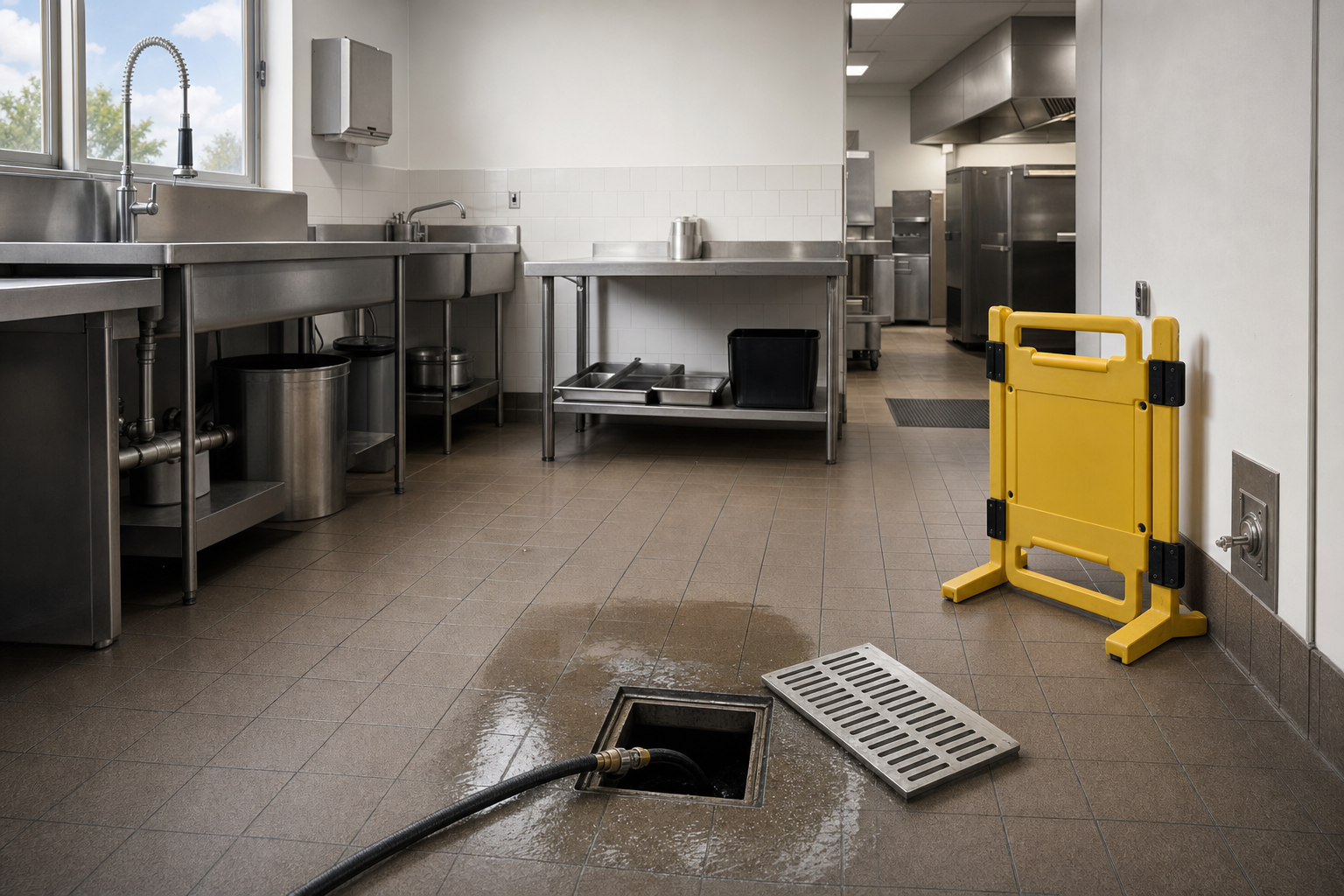
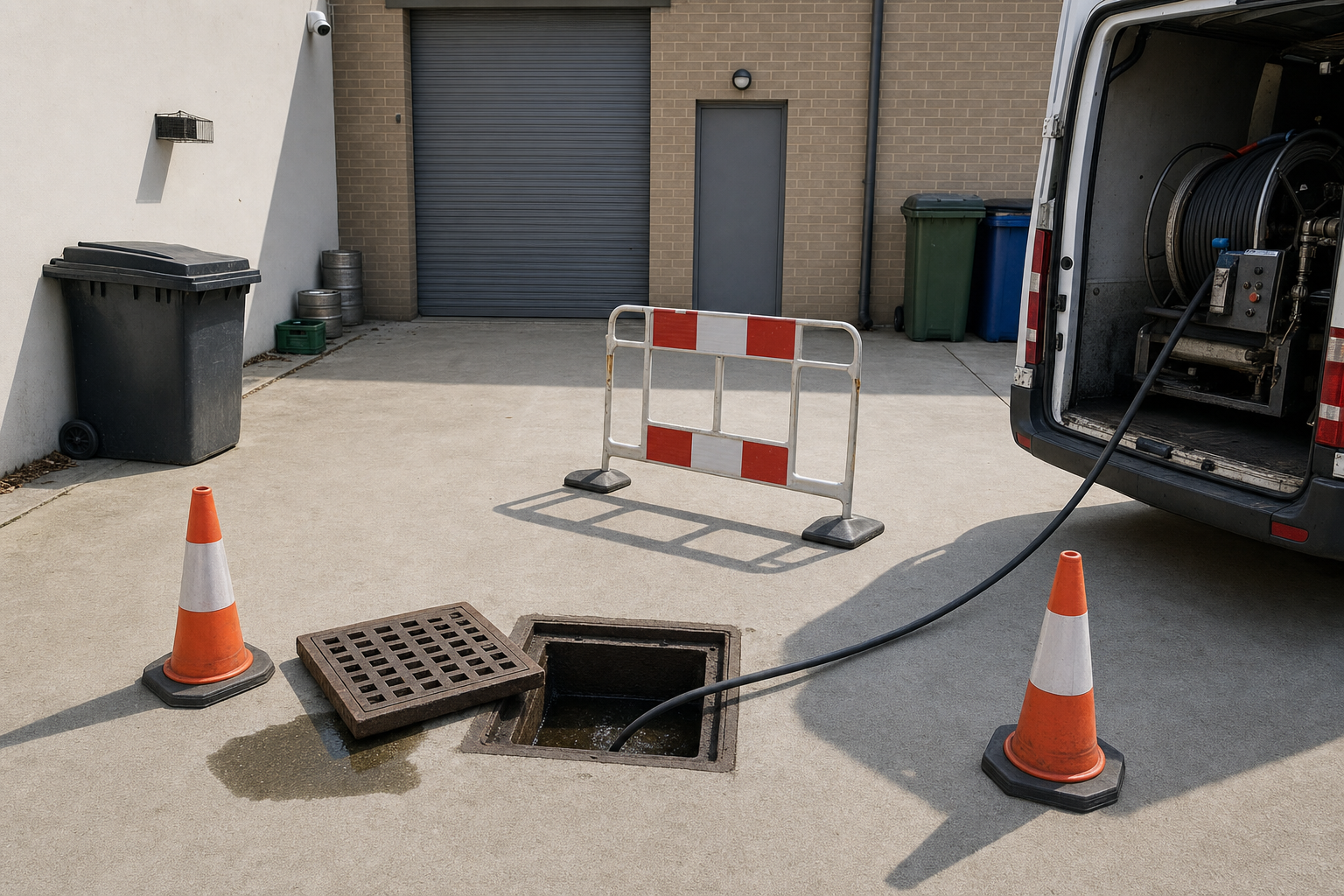
A blocked commercial drain can quickly become more than a simple maintenance issue. Toilets, staff facilities, kitchens, service yards and other working areas may be taken out of use, which puts pressure on normal operations straight away. The number of affected outlets and the layout of the premises help us judge whether the obstruction is local or sitting within a shared commercial drain. A call to Flowfix Drainage Services Ltd also lets us factor in common site contributors such as heavy use, grease, food residue, paper products, silt and outside debris, so the unblocking work is planned around the way the premises actually operates.
Restoring priority facilities with a sensible plan
Commercial unblocking starts with safe drain access and a clear idea of which parts of the premises matter most right now. We work to restore key facilities with as little interruption as the blockage allows, then use what we find during clearance to advise on whether cleaning or planned maintenance may help next. With Flowfix Drainage Services Ltd, you get practical communication about the immediate blockage and the condition of the line after the first problem has been dealt with.
Frequently asked questions
Can you help while our premises stay open?
Often, yes, although the safest approach depends on the blockage and where it sits. We discuss site access, affected areas and the facilities you need back first, then work around those priorities as far as the situation allows. Good pre-arrival information makes that planning much easier and more realistic.
What causes repeat blockages in commercial drains?
High usage is a big factor, but it is not the only one. Grease, food residue, paper products, silt and debris entering outside drainage can all build up over time. If the same area blocks more than once, the line may need cleaning or a planned maintenance approach rather than another isolated unblocking visit.
Do you only clear the blockage or advise on follow-up work?
We do both. Clearing the immediate blockage comes first, but what we find during the job can also show whether the site would benefit from cleaning, jetting or a maintenance schedule for high-use drains. That wider view can help reduce further disruption, especially where the same line handles heavy daily demand.